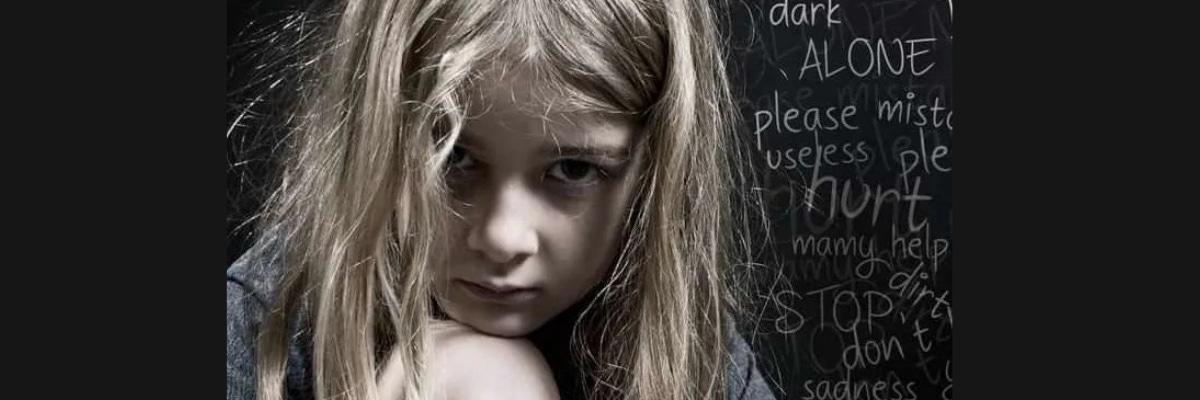
She is a very independent little girl who seems too old for her years and shows signs of maladjustment and difficulty in forming relationships.
Mr. and Mrs. W and their children provide a warm, loving, stimulating atmosphere for Sara who has been deprived since birth of loving relationships. After some initial difficulty regarding Sara’s lack of ability to respond, particularly to Mr. W, she is now adjusting and has accepted by all the family.
Her birth mother was recently admitted to hospital. Her inability to accept Sara as part of the family and her inability to mother this little girl has meant that Sara has spent most of the first 18 months of her life in the day nursery from 8.00.am. to 5.30. each day.
Oh. My. Fucking. God.
The blood in my veins ran ice cold as I speed-read the report I’d requested from the county council. If I’m honest, I’d almost forgotten about the email I’d fired off a few weeks earlier. Maybe I didn’t really expect them to find my records? After all, we’re talking 1970-1972… it’s a lifetime ago. Yet here I was, sitting in a hot, crowded Costa Coffee on Kensington High Street, on a lunch break from manning the company stand at a trade show. Hardly the most ideal time to digest something so life-changing. Or perhaps sitting in the banal everydayness of a chain coffee shop was my subconscious’s way of toning down the impact.
So it was definitely true then? No going back now.
My sister, just before I got married for the first time aged 25, had blurted something about something that might have suggested this stint in foster care as a kid. But there was no detail, no timeline, and it was never spoken of again. I’m now 55.
This report filled in some of those blanks. My sister’s memory of those events from so long ago was sketchy, and Mum and Dad didn’t tell me anything about my early years. It just wasn’t in their playbook to verbalise, or even acknowledge emotions out loud. My other sister recently declared this “a fine way to ruin a life”. Well hey, thanks – but I don’t actually consider my life “ruined”. I have, however, always felt a visceral pull to find out more about what dark secret underpinned and shaped my whole existence.
As a highly intelligent child, I have lived in my head for my entire life. Being smart has been both a blessing and my salvation, enabling me to thrive at school and university, and lead an outwardly normal and successful life, whatever that means! There were early signs of this in the report from when I was around 18 months old:
Mrs. W says that she is becoming more at ease with Sara, but at times finds her disconcerting and her capabilities in routine tasks are quite beyond her own children’s ability at a similar age.
She is a very disconcerting little girl -. she seems too knowing for her age, and gazes at one – Mrs. W says that she never seems to know what Sara is thinking.
My way of getting through life has always been to think my way through it. Thinking and learning – intellectualising – over action is my life’s MO. I shy away from facing, and sitting with, my feelings; ironically the very thing that would actually help me move forwards. And yet I am able to feel others’ emotions very deeply as an empath and HSP (highly sensitive person).
I’ve recently discovered the concept of “relinquishment trauma”;
“the profound psychological wound from the separation of a baby from their birth mother that impacts the developing brain and nervous system”.
Unsurprisingly, this leads to feelings of abandonment, attachment issues, self-worth struggles, and difficulty with emotional regulation. It’s a preverbal, body-based trauma where innate need for connection is disrupted, creating lasting effects on identity and relationships.
That kind of early rupture lives in the body. I grew up capable, intelligent, emotionally perceptive — and hyper-independent. I learned early that safety came from self-containment, not from being seen and supported. Those of us with early relinquishment trauma can often appear high-functioning on the outside. Especially intelligent, empathic, creative people.
And because I like to root everything I process in learning and analysis, you’re going to get a short lesson in the the ways this can show up for adults who’ve been through this kind of trauma:
1. A deep, nervous-system sensitivity to emotional availability
For me this is particularly strong when someone close to me seems to emotionally withdraw or go quiet. It can land as existential threat that tugs at the subconscious abandonment. Because the earliest loss happened before language, my body learned that connection could disappear without warning. I’ve learned to outsource my emotional state to others’ behaviour. Which, quite frankly, is both bonkers and exhausting.
2. Hyper-independence, yet at the same time a longing for connection
This is a big one. I pride myself on not needing people. Don’t get me wrong – I am a people-person through and through, yet somehow I prefer to appear resourceful, capable, self-contained. I feel uncomfortable asking for support, and would never share my deepest feelings with those closest to me.
And yet… I ache to be seen, chosen, prioritised. I feel a deep sense of grief when I’m not emotionally met. I can feel devastated when connection feels one-sided.
3. Living an outwardly successful life while being in total misalignment with our body
Many adults with relinquishment trauma can appear successful, capable and articulate. We’re often intelligent and capable of deep reflection. We’ve “done the work” and can explain ourselves very well, yet we still feel restless, unanchored, emotionally hungry, disconnected and like something is missing but hard to name. What’s really missing here is safety. The kind that should have been established through close loving relationships as a baby and child.
Now that I understand more about this very specific kind of trauma, the next step is to start to ‘re-parent’ myself; gently and with love. It’s time to put myself first. To trust the signals my body has been trying to give me while I was lost in my own head. Yes it’s a long time ago. And maybe I ‘should’ just ‘get over it’, but this kind of deep wound changed my brain’s wiring before I even had a chance. What started in the womb is now a work in progress some 55+ years later.
One thing’s for sure, I am determined to fulfil the glimmer of hope within the notes from my social worker:
It is difficult to see what Sara’s future will be. I feel that we have provided Sara with the best environment possible under the circumstances, and it is hoped that long term fostering in the warm loving atmosphere of the W home will help to repair some of the damage and help Sara to normal adjustment.
Even if that repair is 55 years later than it should have been.
And I’ll leave the final note to a quote from one of my favourite TV shows, written by the fabulous Sophie Willan: “Alma’s not Normal” :
If I could tell that little girl in my records anything, I’d tell her you’re gonna be fine. You’re gonna be more than fine. You’re gonna be fucking fabulous love.
Thank you for reading this post. I hope you enjoyed it as much as I enjoyed writing and sharing it.
The very best way you can support me is by buying a copy of my debut novel, Fragments of Her; available as an ebook or paperback (link below).
If you don’t want to read my book, you could support by pledging a small amount if you wish.
Or if none of the above appeals, you can subscribe for free, or share my posts.
Thanks so much for your support, it’s always appreciated and never, ever taken for granted.
With love, Sara x
Leave a Reply